Mum has dementia and doesn’t recognise me after lockdown
If a parent with dementia doesn’t recognise you, it doesn’t mean they don’t love you. Pointing out their mistake can make things worse, and there are better ways to show you care.
John’s Campaign (to allow people with dementia to have a family carer with them whenever they need them) was gaining support until Covid-19 put a stop to visiting.
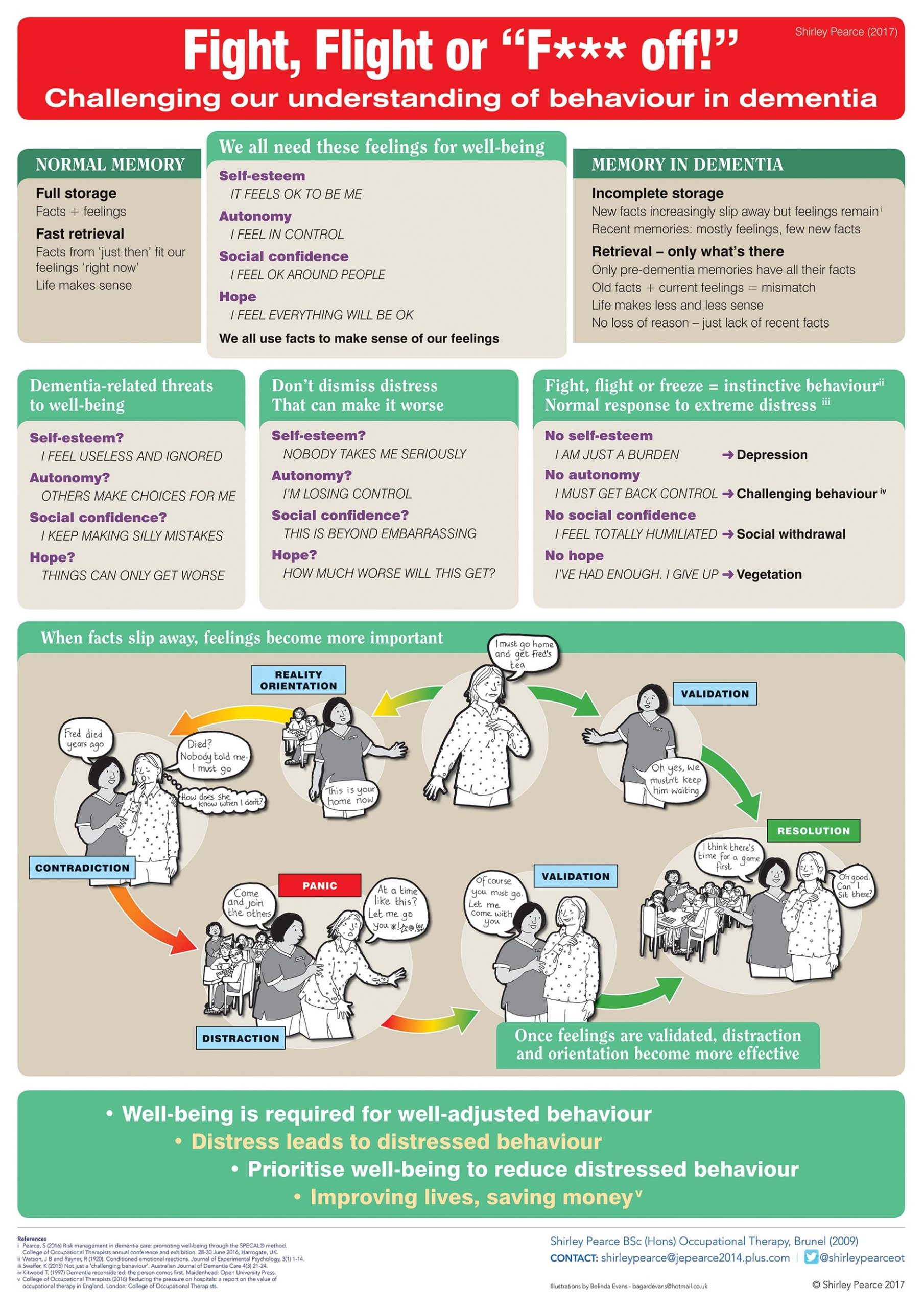
Telling 'the truth, the whole truth and nothing but the truth' is not always appropriate in dementia care. When facts slip away, leaving only feelings behind, those feelings become far more important than the facts.
Lockdown increases isolation for carers and those they support. People with dementia are often better than carers at ‘living in the moment’. Learning to enter into their ‘moments’ may improve the well-being of all concerned.
This poster challenges the view that ‘challenging behaviour’ is just a characteristic of dementia, something that is ‘to be expected’ at certain stages, and we should just deal with it as and when it happens.